 |  |  | I was a Research Engineer/Scientist at the University of Washington's Center for Experimental Nuclear Physics and Astrophysics (CENPA). Some of the projects with which I was involved are listed below. |
| | | I was a Research Engineer/Scientist at the University of Washington's Center for Experimental Nuclear Physics and Astrophysics (CENPA). Some of the projects with which I was involved are listed below. |
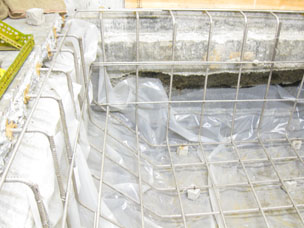 | Housing the ADMX cryostat in its new location at CENPA has required some prepatory building alterations and construction, including cutting a hole in the the concrete tunnel floor and building a "basin" in which to set the cyrostat in the service pit under that floor. Since the magnetic field will be quite strong (nearly 8 tesla!), any excess metal in the pit near the experimental space had to be cleared away, and stainless steel rebar was used in the construction of the basin. I helped specify the dimensions of the rebar. |
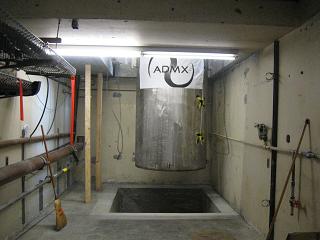 I was one of the supervisors during both the transfer of the old ADMX experimental insert into our building as well as the installation of the cryostat. | 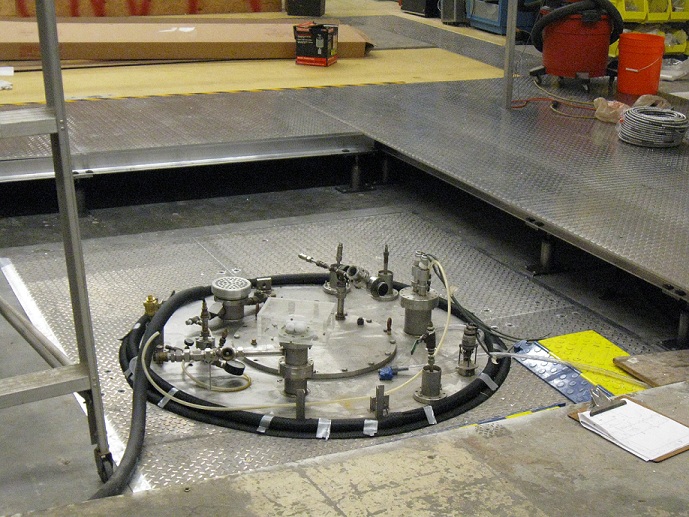 Student houries and I installed the aluminum diamond plate, producing a false floor under which various utilities and signal cables the ADMX experimental setup will run. |
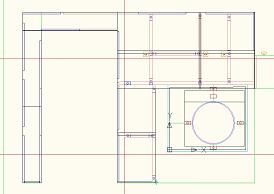 This project has allowed me to begin working in Autocad... | 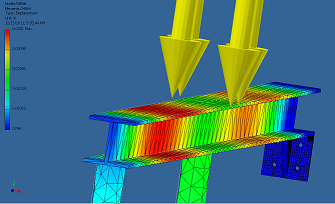 ...and Autodesk Inventor. |
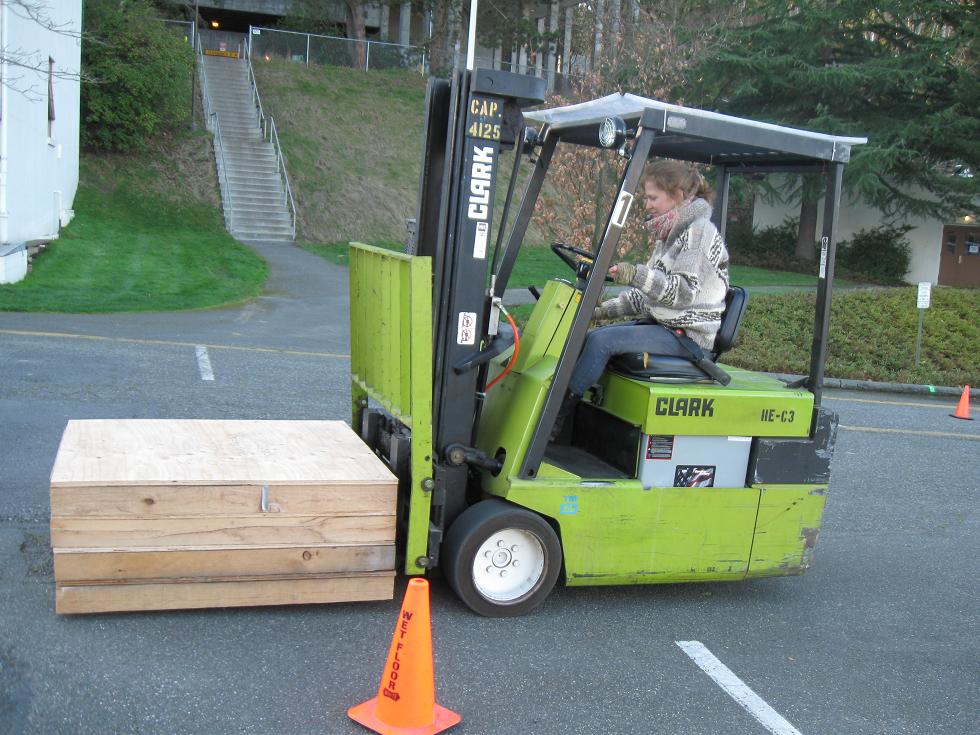 | We extracted and shipped 40 tons of low background lead bricks from the basement of the UW Atmospheric Sciences building, which will eventually be used at shielding in the Majorana experiment in South Dakota. I was able to get my forklift license in order to do some of the heavy lifting! It was great to see all those pallets that I helped make several years ago finally get put to use. |
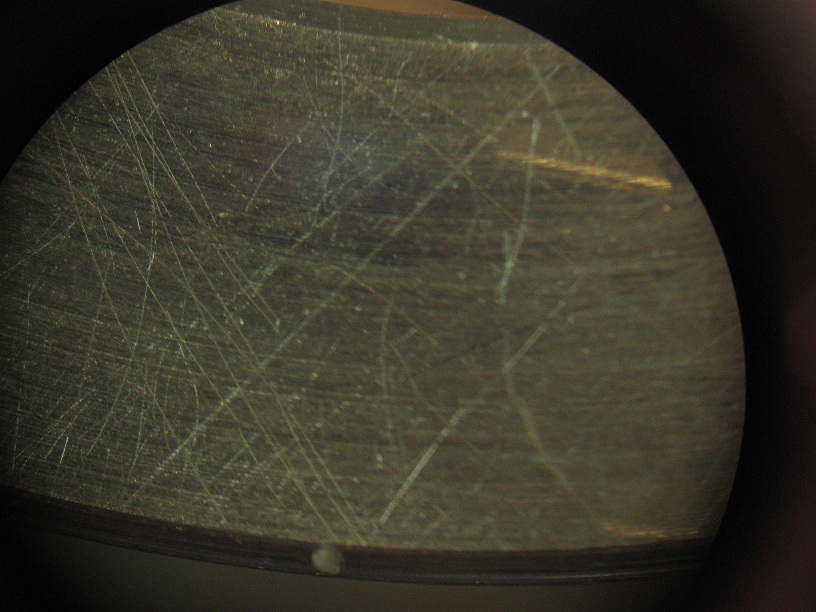 | I worked on some of the research and development for making low-background parylene coated cables for Majorana. |
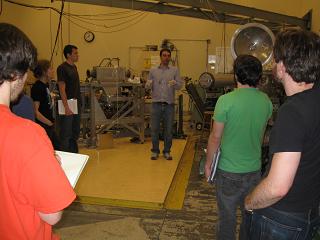 | For the first time, in the Spring 2011 quarter, CENPA was able to offer our own undergraduate research course. Students were invited to attend lectures at CENPA to learn about the basic elements of nuclear physics experiments including detectors, electronics, and data acquisition software. As one of the instructors leading this course, I crew trained each student for several hours on our Van de Graaff accelerator. With this knoweldge, the students were able to perform a Rutherford scattering experiment as well as a simple nuclear resonance experiment. |
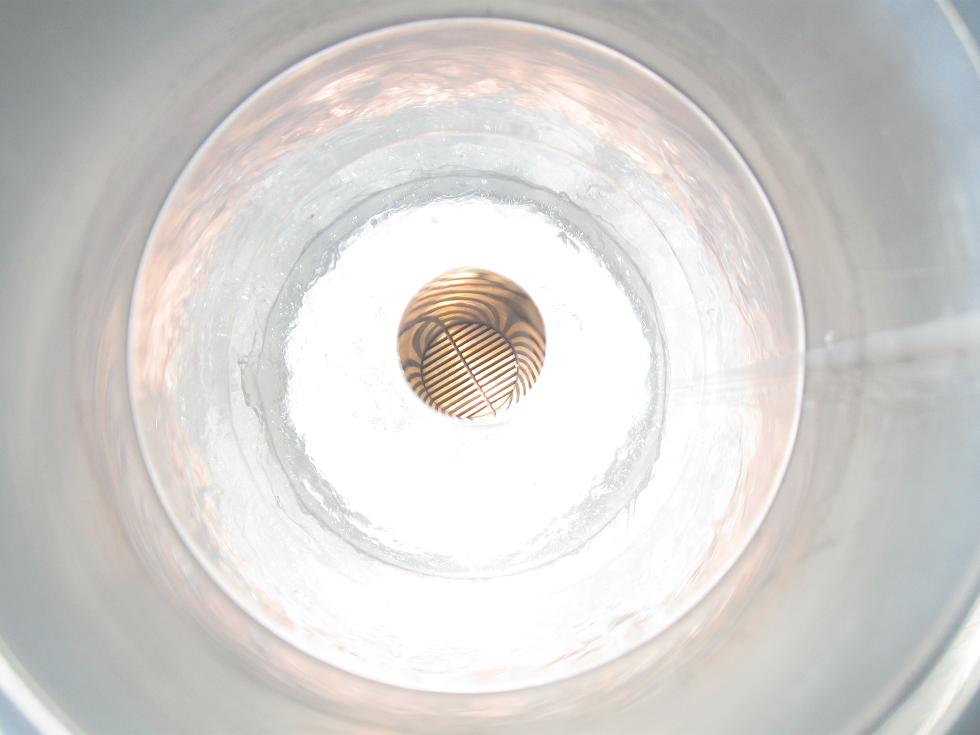 | I helped to assemble and test a heat pipe that will be used to remove excess heat from the KATRIN post-acceleration electrode assembly generated by the detector preamps. The efficient functioning of this device will determine the operating temperature of the KATRIN detector flange. |
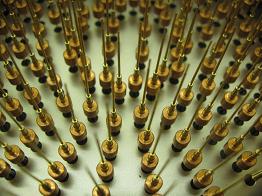 | I installed the copper sheilding donuts on the detector feedthrough pins that the KATRIN collaboration will use to read out their detector and have contributed to the upgrade of an emergency in-line valve. |
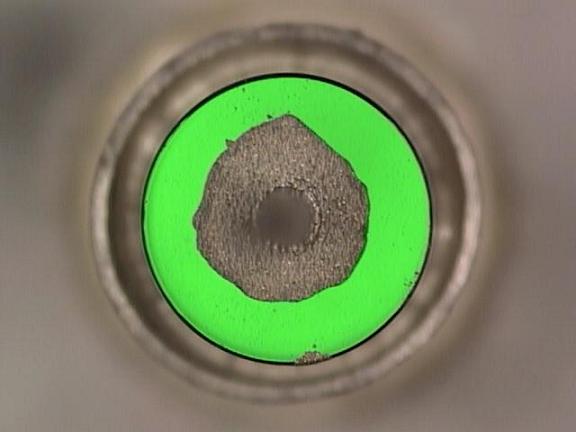 | I tested a sample of the low background sapphire and niobium feedthroughs pins that were considered for use with the KATRIN detector. These feethroughs must be leak tight and able to withstand drastic temperature cycles. |
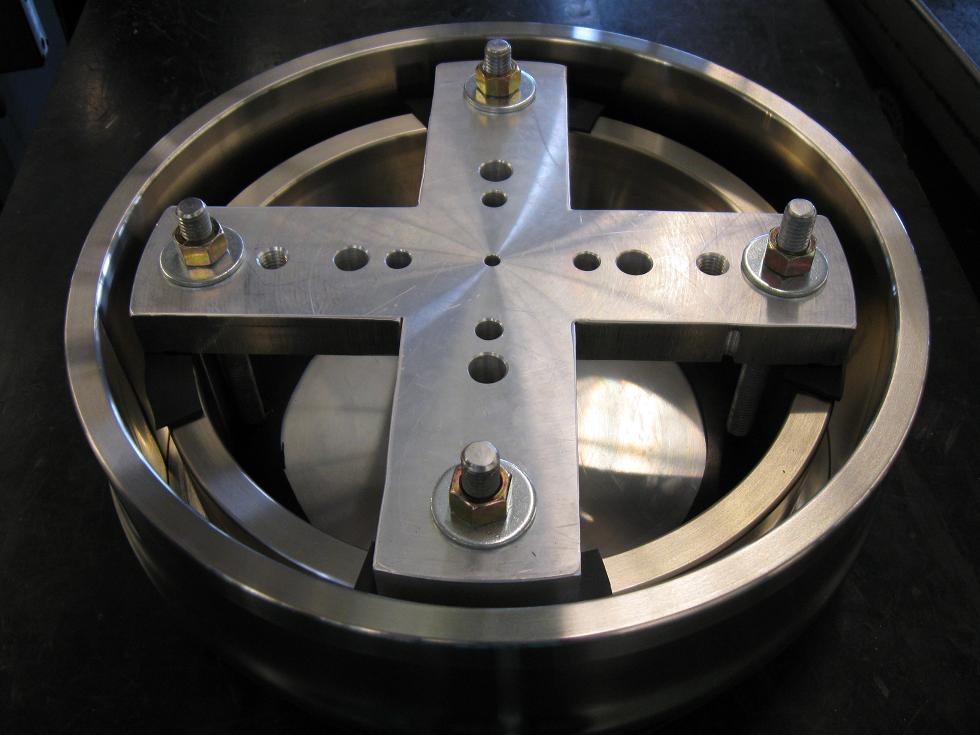 | Replacement components for KATRIN's post acceleration electrode assembly were machined and welded in the Cyclotron Machine Shop at CENPA. I performed iterative leak and deformation tests during the fabrication of these pieces. I have also designed and constructed a crates for shipping these new components so that they can be vacuum brazed elsewhere. |
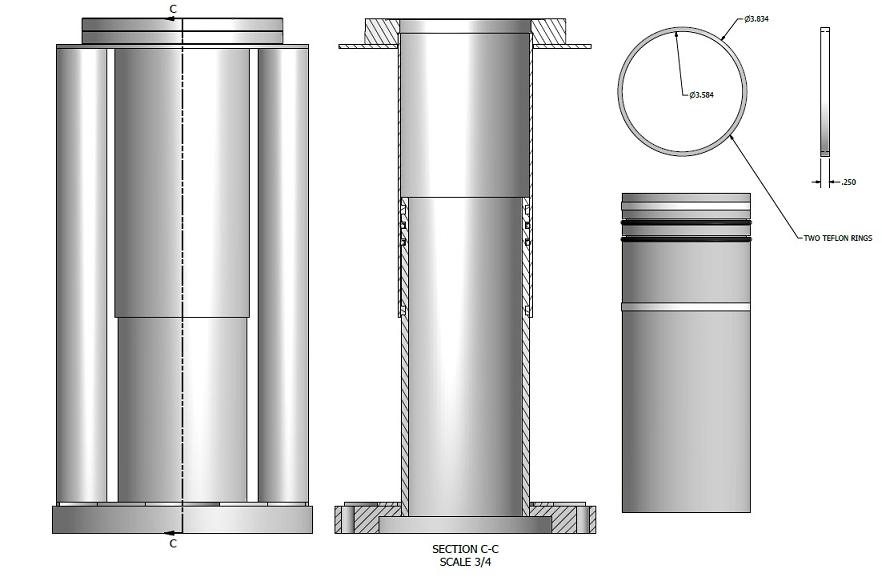 | I produced the Inventor drawings for a nipple with a dynamic seal that will alow the Project 8 wave-guide antenna to be translated through a magnetic field. |
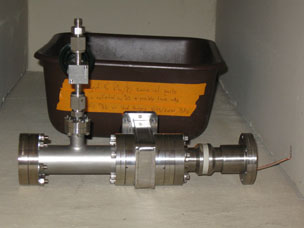 | The prototype radioactive source for Project 8 was made "in house" with the Tandem Van de Graaff at CENPA. We filled our target cell (pictured left) with natural Kr gas and then irradiated it with a proton beam. This produces (among other isotopes) 83Rb, which can decay to 83mKr. The 83mKr then produces a monoenergentic electron of 17.8 keV when it decays to its ground state. As a result, 83mKr is useful as a calibration source in this experiment where tritium (which has an 18.6 keV beta decay electron energy endpoint) will eventually be used. We sucessfully made a 0.8 millicurie source during December, 2010. |
 | I first began working at CENPA as a Student Hourly in the summer of 2005 and was hired back as a Lab Tech for several months in 2009. In 2005, working under Professor Derek Storm, I participated in research including data collection and analysis for the 3He+4He->7Be experiment. I was also an experimenter in Minesh Bacrania's related experiment searching for the forbidden 8B(2+) -> 8Be(0+) transition, for which I was included as an author in the resulting publication. When I returned to CENPA in the spring of 2009 I began working on another accelerator project under Professor Alejandro Garcia measuring the 22Na(p, gamma) resonance strengths. |